How to Choose Trusted Domestic Help for Your Elderly Parents
Finding the right person to help look after your ageing parents at home is one of those decisions that feels heavier than it looks on paper. Data from the Longitudinal Ageing Study of India shows that among elderly people who needed help with daily activities, only 24.8% actually received support from a caregiver, leaving a large gap between need and actual support.
It's not just about finding someone who can cook or remind them to take their medicines. It's about letting a caregiver into your parents' daily life, their home, and the moments where they need support. And that takes a level of trust that doesn't come easily, which is exactly why families are increasingly looking for a trusted caregiver for parents rather than relying on guesswork.
The tricky part is that most families don't really know where to start. A neighbour recommends someone. A placement bureau sends over a list. A WhatsApp group throws up a few names. And before you know it, you're trying to make an important decision based on very little reliable information, often without access to verified domestic help for elderly or even a basic police verified maid service to fall back on.
So here's a practical guide to help you think it through properly.
Start by getting clear on what you actually need
Before you look for anyone, sit down and think about what a typical day looks like for your parents right now. Do they need help with cooking and basic housekeeping? Do they need someone to remind them about medications or accompany them to doctor visits? Are there mobility issues that mean physical assistance is needed? Or is it more about having someone around so they're not alone for long stretches of the day?
The reason this matters is that domestic help isn't one-size-fits-all. Someone who's great at managing the household may not have the patience or training to support a parent with early-stage dementia. Getting this clarity upfront saves you a lot of back-and-forth later.
Go through a proper agency, not just word of mouth
A lot of families rely on personal referrals, and while that's understandable, it also comes with real risks. The person who worked well for your neighbour's healthy 65-year-old may not be the right fit for a parent managing a chronic illness or recovering from a fall.
Registered agencies do background checks, verify identity documents, and have some level of accountability if things go wrong. When you're talking to an agency, ask them directly whether they carry out police verification on their caregivers, what training their staff has gone through, and what happens if the person they send doesn't work out. A good agency will answer these questions without hesitation.
This is something Sukoon takes seriously through its Physical Security Sukoon service, which includes police verification of domestic staff as a standard step, not an afterthought.
Always meet the person before they start
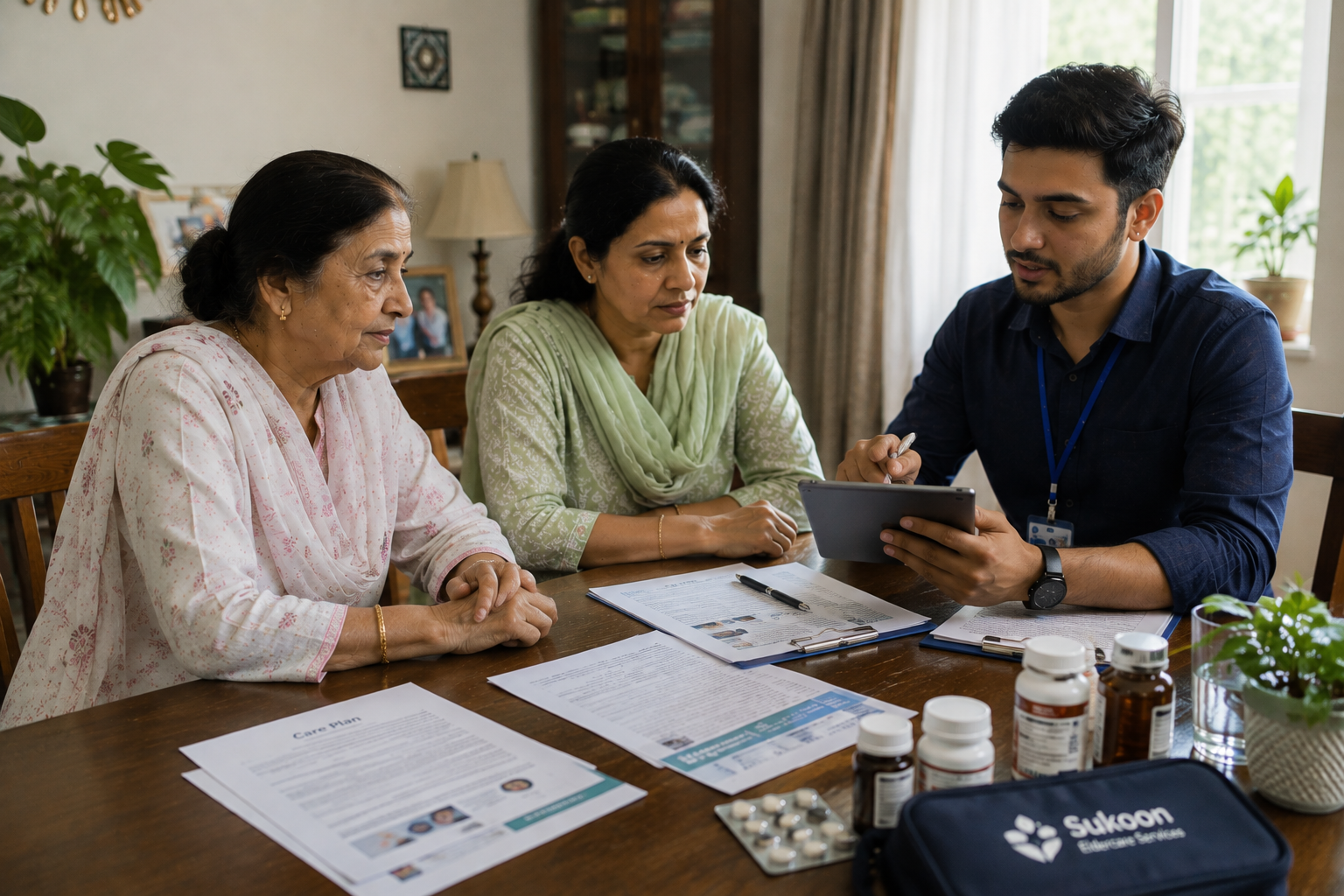
The very first thing one should do is get to know the individual who is going to take care of your parents. Take the time to meet the caregiver in person before they begin. Bring your parents into that meeting if you can and pay attention to how they speak, how patient they seem, whether they make eye contact, and how they respond when your parents talk to them.
Language and comfort matter more than they get credit for. An elderly person who can't easily express themselves to their caregiver will slowly stop trying, and that creates its own set of problems.
Ask about what happens when things go sideways
What if the caregiver falls sick and can't come in? What if there's a medical emergency at home? What if your parents and the caregiver don't get along after a few weeks?
These situations come up more than anyone plans for, so it's worth asking the agency how they handle them before you commit.
Do they have backup staff they can send in quickly? Is there a process for raising concerns? Will someone from the agency check in periodically to see how things are going?
Families who feel like they're being looked after through the process tend to have much better experiences overall.
Get everything in writing
Verbal agreements feel fine when things are going well. They fall apart the moment something goes wrong. Make sure you have a proper written agreement that covers what the caregiver's duties are, what the working hours and days are, what the charges include, and what the process is if you need to end the arrangement.
Keep a close eye on things once someone starts
Choosing the right person is only half the job. The other half is staying involved after they've started. Drop in at different times if you don't live with your parents. Talk to your parents regularly about how things are going, and pay attention to the small things.
Are they eating properly? Do they seem comfortable? Is the house being kept the way they like it?
For families living in another city or abroad, this is where Sukoon's Family Sukoon service comes in with regular updates and structured check-ins so you're always in the loop, even when you can't physically be there.
Don't ignore the emotional side of things
For a lot of elderly parents, accepting help at home can feel like a loss of independence. They may push back, even if they genuinely need the support. Try to involve them in the process as much as possible, let them meet and give feedback on whoever you're considering, and frame it as adding support rather than taking over.
When your parents feel like the decision was made with them rather than for them, they're much more likely to warm up to the new arrangement.
How Sukoon approaches this
At Sukoon, we've seen first-hand how much the right support can change things, not just for elderly parents but for the entire family.
We work with families to understand exactly what kind of help their parents need, and then help them put that support in place thoughtfully. Through Sukoon Assisted Services, we connect families with trusted, verified manpower and reliable service partners for everyday needs; whether that's housekeeping, a driver, or someone to help around the house day to day.
That also includes helping with the day-to-day coordination, keeping track of how things are going over time, and staying available when something needs to be sorted out, the kind of ongoing support that proper home care for elderly parents actually requires.
Because honestly, the goal isn't just to find someone who can help around the house. It's to find a trusted caregiver for parents, the right fit for your family, and then stay on top of things to make sure it keeps working well, which is really what good senior citizen care services are meant to deliver over time.